



14 July 2026
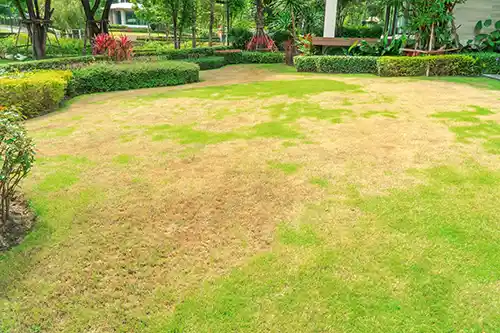
When Massachusetts temperatures climb into the 90s, cool-season lawns can quickly show signs of stress: bluish-green blades, curled leaves, lingering footprints, and brown patches. The goal during extreme heat is not always to keep grass perfectly green; it is to keep the roots alive, reduce stress, and avoid wasting water.
Start by watering only when the lawn shows mild drought stress. If local rules allow irrigation, water deeply and early in the morning so moisture reaches the root zone before the day heats up. Frequent shallow watering encourages weak roots and can make turf more vulnerable to disease. In towns with restrictions, always follow your local water supplier’s schedule before turning on sprinklers.
Mowing matters, too. Raise the mower blade during hot stretches and follow the one-third rule: never remove more than one-third of the grass blade at a time. Taller grass shades the soil, slows evaporation, and helps roots stay cooler. Leave clippings on the lawn when possible; they return nutrients and add a light layer of protection.
Avoid fertilizing, aerating, dethatching, or reseeding during peak heat. These practices push growth or disturb the lawn when it is already under stress. If your lawn thins out over the summer, plan repairs for late summer or early fall, when Massachusetts turf typically has cooler weather and better recovery conditions.
Finally, remember that some browning is normal. Many Massachusetts lawns go semi-dormant during hot, dry periods and can recover when rain and cooler temperatures return. A resilient summer lawn is not necessarily the greenest one on the block—it is the one managed with patience, smart watering, higher mowing, and respect for local conservation rules.



© 2025 Monnick Supply. All Rights Reserved. Created and Maintained by WSI Pro Marketing.