



12 June 2026
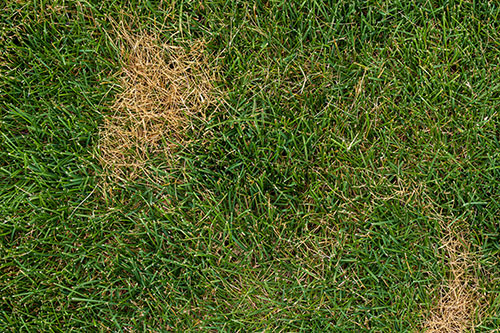
This year is bringing some heat stress to many lawns in Massachusetts, which can cause lawns to thin, turn brown, and even die. But don't let that get you down, you can get your lawn looking back to normal and even better!
Want to find out how you can revive your lawn after the drought has passed? We're answering some key questions to help get your lawn back to green.
Q: How do you know if your lawn is suffering from drought? Or something else?
A: That can be tough, there's a couple of ways to try to figure it out.
Step on it - take a few steps (only a few, too many could cause more damage) on your grass and look back. Can you still see your footprints? If so, that is most likely drought stress.
Check out the color - is the color of your grass changing? Is it looking bluish to purple/gray instead of bright green? If so, it's probably a drought issue.
Be careful, drought usually impacts your entire lawn, not just patches. Brown patches could be the sign of another problem like lawn disease or insect damage.
Q: Should I mow my lawn during a drought?
A: It is OK to mow your lawn during a drought but mow your lawn high. The higher you mow, the deeper your lawn's roots will grow. Mow at the height recommended for your grass type and never remove more than ⅓ of the total height in a single mowing, as that can further stress your already stressed-out grass. When it's not looking lush, it's tempting to cut grass short—out of sight, out of mind, we feel you—but less growth on top means less root growth, and deep roots are key to dealing with a drought.
Q: I have watering restrictions where I live, what should I do?
A: It's important to keep your lawn healthy year-round in the event a drought does occur. If you find yourself affected by a drought, sit tight and water when and if you can. Once the drought is over it is ok to feed and water again. A typical lawn can usually go up to 4 weeks without water while it's in the dormancy phase.
Q: How can I quickly revive my lawn once watering restrictions are lifted?
A: If you are able to water your lawn, it's best to do so in the morning, usually between 6 a.m. and 10 a.m. when it's a little cooler. This allows less water to be lost to evaporation and your lawn will have plenty of time to dry off before nightfall. If possible, we recommend deeply watering your yard for about two weeks to help it recover. Allow the water to soak into the soil table so it will become saturated and the roots will be able to absorb plenty of water. For an extra push, use a Scotts® Turf Builder® fertilizer to help feed your lawn because helping to build strong roots can get your lawn through dry spells.
Q: Do I need to plant grass seed after the drought to bring back my grass?
A: The best time to plant grass seed is either in the spring or fall when the temperatures are a little cooler. If you are experiencing a lot of dead areas in your lawn it may be time to put down some seed to allow new grass to grow, this will help prevent weeds from taking over in your lawn. Try using Scotts® Turf Builder® Rapid Grass and see grass grow in as little as 12 days! Remember to apply grass seed during appropriate weather conditions and for best results, it's important to water twice daily for at least 3 weeks. Watering your newly planted grass seed is the key to success.
Appropriate Temperatures to Plant Grass Seed
Sun & Shade 60 - 80°F
Tall Fescue 60 - 80°F
Bermudagrass 70 - 90°F
Q: When is the best time to apply fertilizer to my grass?
A: We recommend delaying the use of fertilizer during a drought until the lawn is no longer stressed. Even if you won't be spreading any grass seed, it is still good to apply lawn food so your yard is getting the nutrients it needs to repair damage from heat and drought, ensuring stronger grass in the spring. Scotts® Turf Builder® WinterGuard® Fall Lawn Food will provide the nutrients your lawn needs to bounce back this fall! Aerating your lawn prior to fertilizer application can allow for better absorption of the nutrients and aid in root growth.
Need help with lawncare? Contact Monnick Supply in Marlborough and Framingham.
Source: Scotts.com



© 2025 Monnick Supply. All Rights Reserved. Created and Maintained by WSI Pro Marketing.